Work out what is worth automating before you spend anything on it

Most owners of a small business already know the admin is out of hand. The hard part is knowing which bit to fix first, and whether it is worth paying anyone to fix at all. That is what the free session is for. Thirty minutes on a video call with Rod or Petra, and you leave with a straight answer.


Smiling man with short dark hair, beard, green button shirt, tattoos on forearms, and black wristwatch.
Two people collaborate and discuss ideas while drawing wireframe sketches on clear glass.
30 min
On a video call.
No cost or obligation.
Make a plan
Fixed prices, agreed before anything starts.
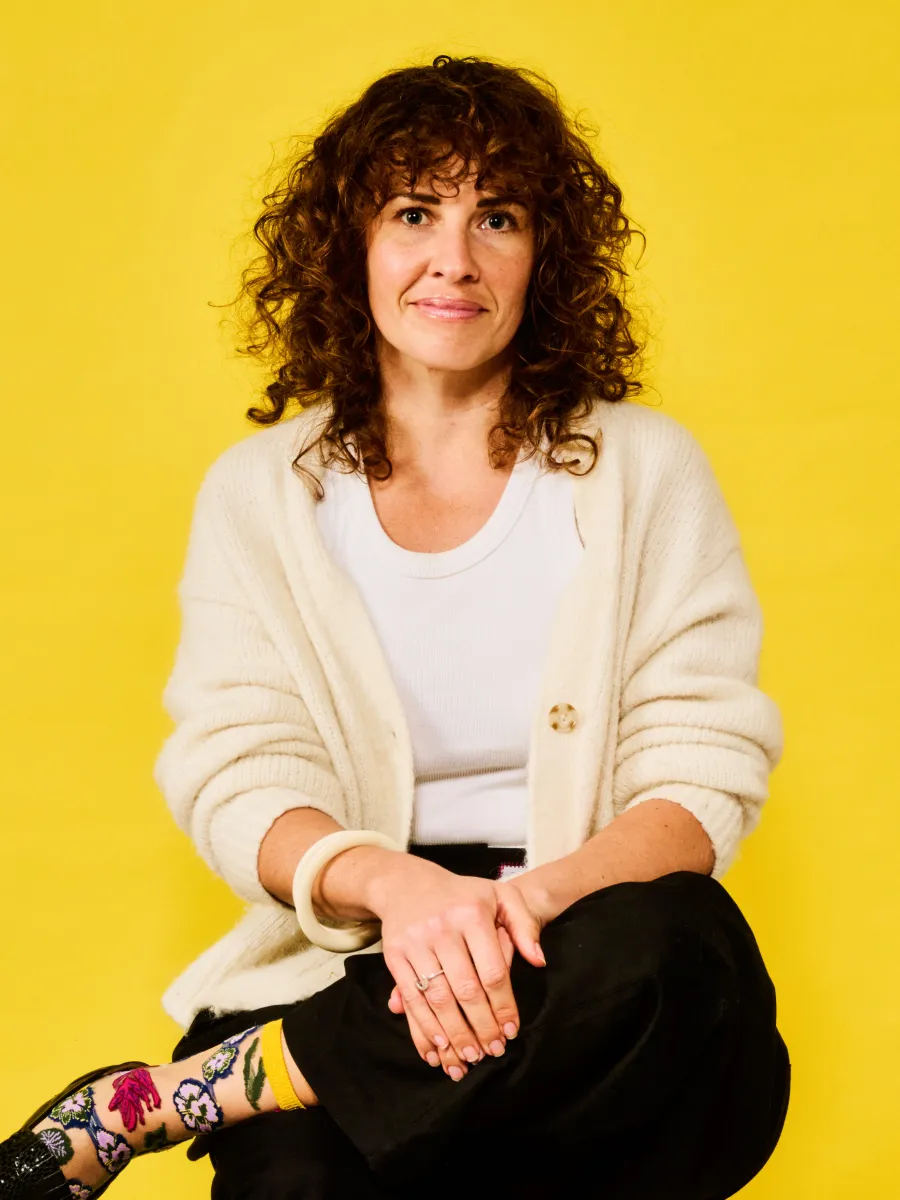
Woman with curly hair wearing a white shirt, cozy cardigan, and floral socks sitting against yellow background.

The work nobody pays you for

A plumbing business, a physio clinic, a cafe and accountants do completely different work and finish the day the same way.

56% of small business owners spend half their time running the business rather than doing the work they are paid for.

Stop quoting and invoicing after hours

The day goes to the actual work, so the quotes and the invoices get done at night.

Every hour of that is an hour you're neither paid for nor off the clock.

Missed calls and enquiries you never got to

The phone rings while you are on a job or with a patient, and it goes to voicemail.

Some of those callers ring the next business on the list. You never find out which ones.

Folowing up money that has not come in

Chasing an overdue invoice feels like nagging a customer you want to keep, so it waits another week.

Invoices are generally paid 6.6 days late, and your cash flow is affected by that delay.

Everything goes through you

The prices, the process, the customer history, and the reason you do it that way.

All of it lives in your head, which means nothing moves while you are busy, away, or asleep.

Team in a modern office discussing tasks on a whiteboard with sticky notes in a brainstorming session.

You have probably already tried a few things

  • ChatGPT or Claude. Interesting for a week, then it sat there.
  • Software that is still on the credit card and still not set up, cause it's complicated.
  • An assistant who took longer to train than the task.
  • An employee who sorted it out, then moved on with it in their head.

None of that is wasted. We usually start with what you already pay for and whether it can be made to work, before anyone talks about building something new.

The plan that actually works

Every one of those starts by picking something and hoping it fits the business. Work out which task is costing you the most first and the decision about what to build becomes obvious. Sometimes the honest answer is that nothing is worth building yet, which is also worth knowing before you spend anything.
Man in blue shirt talking on phone while writing notes in a notepad at a bright office desk.

What the 30 minutes consultation looks like

No hard sell or pitch deck. We ask you to walk us through a normal week, then we do four things.

Step 01

Recognise

You tell us where the time goes. We listen and write it down.Investigate. We ask what each of those tasks costs you, in hours or in money, so we are looking at facts rather than impressions.

Step 02

Investigate

We name the one or two tasks worth fixing first and roughly what it would take to fix them.

Step 03

Structure

You get that in writing afterwards, whether or not you ever work with us.

Step 04

Evolve

You get that in writing afterwards, whether or not you ever work with us.

What we have actually built

Plenty of consultants will sell you a strategy deck. We'd rather show you working software. When the assessment finds something worth building, it becomes one of these.

Saving 7 hours per week

A team of seven kept losing the same hours to the same copying between tools. Rod built workflows for the tasks that repeated most. Nobody lost a job over it.

Days of searching, down to a dollar a scan

Grant consultants were losing days per client to database searches. We built a scanner that read five sources at once and ranked every match with a plain reason.

Built for an 80 year old on their first tablet

We led the design of a resident app for elderly care. One action per screen, an obvious way back, tested with real residents. Engagement rose 208 per cent.

Sometimes the answer is not to build it

A chatbot is often the wrong tool. We retired our own grant scanner once clients made it clear they wanted the writing, not the software. If a form fixes your problem, we will say so.

An Australian start-up with nothing to send a buyer

UndaTech make fire-safe protective gear for defence and first responders, and had nowhere credible to point a procurement buyer. We built the store and a system they can keep extending themselves. They have come back twice since.

Questions people ask before they book

Straight answers below. Anything not covered, ask in person.

Book a free exploration
Xero and MYOB already have AI built in. Why would I pay someone?

Use them. Snapping a receipt or asking a question in plain English inside your accounting software is genuinely useful and it costs you nothing extra. What those features cannot do is the bit that is specific to you, where an enquiry arrives one way, gets quoted another way, and ends up in a system that does not talk to the first two. That gap is where your evenings go, and it is the only thing we work on.

Could my son do this? He is good with computers.

Probably, for a first version. The question is what happens in a year. If he moves on, gets busy or loses interest, the knowledge goes with him and you are back where you started with something half finished that nobody understands. If he wants to build it and keep it running, that is a genuinely good outcome and we will tell you so in the session.

Do I need to understand any of this?

No. You need to know your business, which you do. We will not ask you to learn a new system or make decisions using words nobody uses out loud.

What happens to my customers' information?

We will tell you exactly where your data sits, who can see it and what we would use it for, before you agree to anything. If you have obligations under the Privacy Act, or the New Zealand equivalent, we work inside them. If we cannot do something safely, we will say so rather than working around it.

What if it breaks?

Things break. That is why we either keep it simple enough that it does not need looking after, or we look after it for a set monthly amount. What we will not do is hand you something fragile and walk away.

Are we too small for this?

A one or two-person business is not too small. Most of what we build is for businesses between two and ten. If your problem is genuinely too small to be worth paying for, that is a 30 minute conversation and a straight answer, not a sales process.

Who you will be talking to

Rod and Petra. Two people, both based here, and the same two people through the whole thing. Nobody hands you to an account manager, and the person who scopes the work is the person who builds it.

We have been working with AI for the last 4 years, and we understand small and medium businesses so they can stop spending time on repetitive tasks and focus on areas where they can add more value.

Woman with curly hair wearing a white shirt, cozy cardigan, and floral socks sitting against yellow background.

Petra Susanne Axelsson

Petra makes sure people actually use the thing. Software that nobody adopts is expensive decoration, and she's seen enough of it to design against it. She works with your team on how the automation fits their real day, which is why our builds are still running months after handover.

Smiling man with short dark hair, beard, green button shirt, tattoos on forearms, and black wristwatch.

Rodrigo Acevedo

Rod finds the automation. Years of design and product leadership taught him one thing that stuck: most business problems are workflow problems wearing a disguise. He's the one asking why a task exists at all before anyone builds a robot for it. Built the Grant Finder because he was sick of doing the same research by hand.

Book a free session.

Your session

  • 30 minutes
  • Video call
  • No cost, or obligation

What we cover

  • How your week actually runs
  • Which tasks are costing you the most
  • What is worth fixing first, and what is not worth fixing at all

Our Commitment

If we are not the right fit, we will tell you during the session and point you in a better direction. No charge and no invoice.

Thanks for you enquiry!

We will be in touch very soon!
Oops! Something went wrong while submitting the form.